In one of the most consequential healthcare deals of the year, President Trump’s new drug-pricing pact with Eli Lilly and Novo Nordisk slashes the cost of blockbuster GLP-1 drugs like Wegovy and Zepbound, turning a luxury medicine into a mainstream benefit—and forcing Ro, Hims, Mochi Health, and other telehealth players to rethink their most lucrative business model.
A Populist Price Drop That Changes Everything
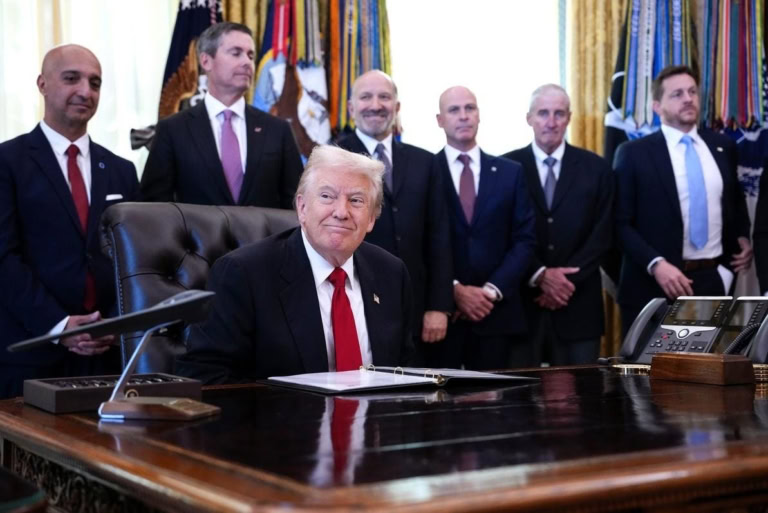
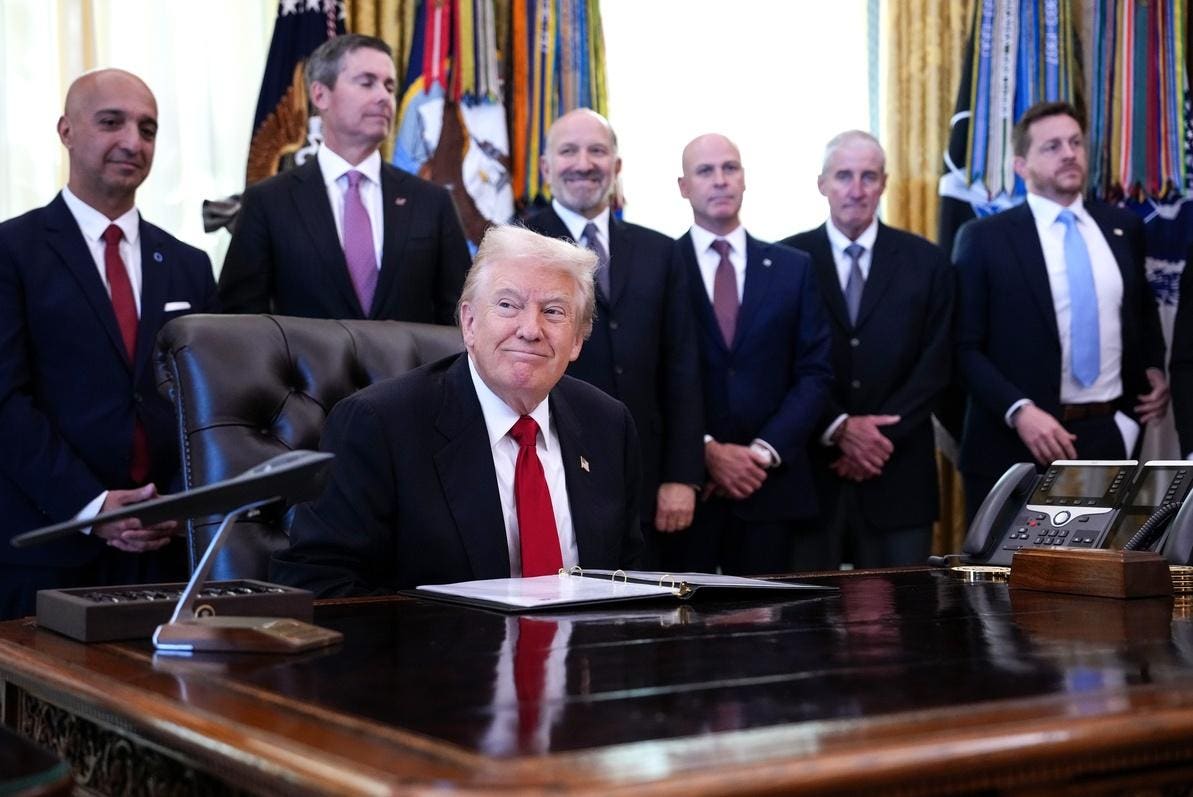
President Donald Trump’s latest “Most Favored Nation” drug-pricing deal has redrawn the weight-loss map.
In exchange for discounted list prices—around $245 a month under Medicare with a $50 copay—Eli Lilly and Novo Nordisk secured expanded federal coverage for obesity-related care starting in 2026.
It’s a steep fall from list prices that once topped $1,000, and a direct hit to the $500-a-month cash-pay market telehealth startups built their growth on.
Rather than defend high list prices, Lilly and Novo are using scale itself as the new moat—turning volume into their competitive weapon. The Wall Street Journal reported that Bernstein estimates the Medicare expansion could unlock 30 million new patients, a $27 billion annual opportunity.
The timing is favorable. Both companies are preparing to launch oral versions of their GLP-1 drugs, and the Trump administration has granted them “priority review” vouchers through the FDA to speed up approvals. As part of the deal, the lowest dose of Lilly’s pill is expected to sell directly to consumers for about $149 a month—a price that could make daily weight-loss pills as common as vitamins.
The move also creates ripple effects across the industry. It pressures Pfizer, Roche, and Amgen, all of which are racing to bring obesity drugs to market but now face a dramatically lower price floor and heavy manufacturing costs.
Lower prices could also squeeze the compounders that make knockoff GLP-1s—a market currently worth billions in aggregate. More than a million Americans buy compounded semaglutide through telehealth platforms such as Hims & Hers and Ro, which are already seeing a slowdown in GLP-1 prescription volume as patients shift to cheaper branded options.
Previously, Medicare only covered GLP-1 drugs prescribed for diabetes or related cardiovascular conditions, excluding most cases where obesity was the primary condition. The Trump administration’s new deal doesn’t reverse that policy entirely—it broadens access to a subset of beneficiaries who have obesity in combination with another serious health condition such as diabetes, prediabetes, or heart disease.
In other words, the change acknowledges obesity as a medical factor contributing to chronic illness without yet classifying it as a stand-alone disease for coverage. STAT News noted that the new deal stems from pricing negotiations rather than a full legislative overhaul. Medicaid coverage will continue to vary by state, as the federal government has not mandated obesity treatment under the program.
Still, this incremental shift marks the first formal acknowledgment by Medicare that obesity can be medically relevant, not merely cosmetic—a symbolic step toward reframing how the U.S. health system defines and reimburses metabolic care.
From Luxury to Coverage: The End of Cash-Pay Exclusivity
For much of the GLP-1 boom, access came through compounded semaglutide and tirzepatide sold by boutique telehealth platforms and concierge doctors.
Only recently have those same startups begun dispensing branded versions via Lilly Direct and Novo Nordisk partnerships.
Now, with Medicare and potentially Medicaid covering branded GLP-1s, the exclusivity that fueled $500-a-month subscriptions is evaporating.
Once a luxury reserved for the cash-pay elite, weight-loss drugs are about to be as accessible as statins—a shift that could redefine how obesity care is delivered and challenge the direct-to-consumer playbook that made it mainstream.
Telehealth’s $500-a-Month Business Model Meets a $245 Ceiling
Startups built their valuations on the assumption that consumers would self-pay $350 to $500 per month for fast access and ongoing coaching. Trump’s deal caps that advantage. Below, the new price realities collide with venture economics:
Chart: The GLP-1 landscape is shifting fast — startups like Hims, Ro, and Mochi face pricing pressure as Trump’s Medicare deal lowers branded drug costs and expands access. (Data: Forbes, PM Insights, company filings)
The Compounding Come-Down
Cheaper branded drugs will also erode demand for compounded semaglutide. Over a million Americans currently source compounded versions via digital clinics—many operating in gray-market zones.
As Wegovy and Zepbound hit $245 under Medicare and $350 direct-to-consumer, the savings that once justified compounding largely vanish.
Expect consolidation, tighter FDA scrutiny, and a flight to legitimacy among compounders who survive.
Longevity, Microdosing, and the New GLP-1 Fringe
From Silicon Valley to Los Angeles, New York, and Miami Beach, GLP-1s have quietly joined the longevity stack—used not just for weight loss but as part of anti-aging regimens alongside metformin, NAD⁺ infusions, and peptide cocktails. In tech circles, they’ve become a biohacker’s badge of optimization; in luxury wellness enclaves, a status symbol of self-control and access; and across celebrity culture, shorthand for the new performance aesthetic. That crossover keeps the category culturally aspirational even as it becomes medically mainstream.
While Medicare’s expansion will bring GLP-1s to millions, it will also push them further into the mainstream—leaving longevity enthusiasts and precision-health users to seek flexibility elsewhere.
Branded drugs like Wegovy and Zepbound are only available in two standard dosages, limiting personalization and tapering. Compounded versions, by contrast, allow microdosing and dose customization—a key reason they’ve remained popular among the biohacker and longevity community.
Yet results vary. Many users report compounded semaglutide doesn’t deliver the same satiety or metabolic effects as branded versions, highlighting quality inconsistencies and purity concerns. Still, for wellness clinics and functional-medicine providers, custom formulations hint at GLP-1’s longer-term potential in longevity and metabolic optimization—an arena branded drugmakers can’t legally market toward.
VC Reality Check: The End of Margin Myopia
Investors once valued these startups like software: recurring revenue, low churn, and sticky subscriptions. But healthcare behaves more like a utility—subject to policy swings and payer power.
Now that Medicare sets the reference price, telehealth platforms must find new defensible moats: clinical outcomes, employer contracts, or AI-driven adherence tools.
The next generation of winners will look less like DTC brands with celebrity spokespeople and more like infrastructure companies—focused on clinical outcomes, payer integration, and care continuity rather than marketing.
Politics Meets Metabolism
Trump’s populist framing—“bringing obesity care to every American senior”—transforms GLP-1s into a political symbol as much as a public-health tool.
Trump’s populist framing—“bringing obesity care to every American senior”—transforms GLP-1s into a political symbol as much as a public-health tool.
CMS Administrator Mehmet Oz declared the program could help Americans “lose billions of pounds by the midterms.”
Beyond rhetoric, the administration also granted priority-review vouchers for oral GLP-1s, further entwining regulation and reelection optics.
The New Healthcare Divide
This moment marks a power shift from telehealth’s cash-pay capitalism to Big Pharma’s scaled-coverage capitalism.
For consumers, access expands.
For startups, the subscription era that turned medicine into marketing may be ending—replaced by a battle over adherence, not acquisition.
The next phase of the GLP-1 era won’t hinge on who can sell the most prescriptions, but on who can help patients stay the course—especially as oral versions arrive in 2026 and adherence becomes the ultimate currency.
Author’s Note
This piece is part of my ongoing GLP-1 Economy Series, which explores how weight-loss drugs, digital health, and venture capital are converging to reshape healthcare, longevity, and consumer behavior. Previous articles in this series include:
Together, these stories trace the evolution of the GLP-1 era—from celebrity-driven marketing and compounding gray zones to the policy resets and platform pivots defining the next phase of telehealth.